Here are some of the wonderful woven goods in Bhutan - mostly in cotton, some in silk or wool.
The first few are from a studio in Paro, where 6 girls from country weavers' households have been employed. They work from memory, on beautiful and intricate family patterns, sometimes adding in 20-30 colours. Their day includes helping and cleaning in the shop/studio and some weaving before lunch, and then weaving for 5 hours in the afternoon, seated on the floor.


The traditional men's gho - which is very long, but worn bunched over at the waist so that it is about knee length.

 It's hard to decide what to buy
 Couldn't resist this shot of the baby behind the counter in another shop.

These next pictures are of women weaving outside their homes.
 My scarf below, is on the top of the third pile!


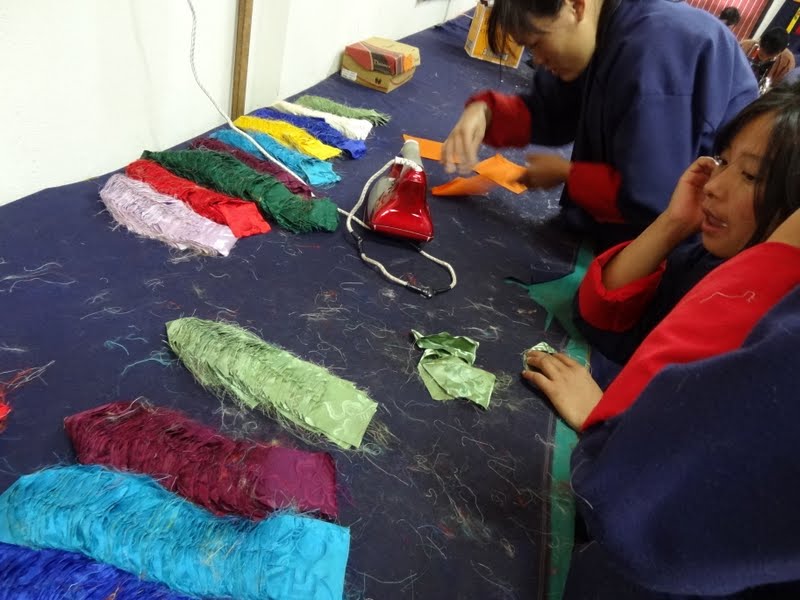
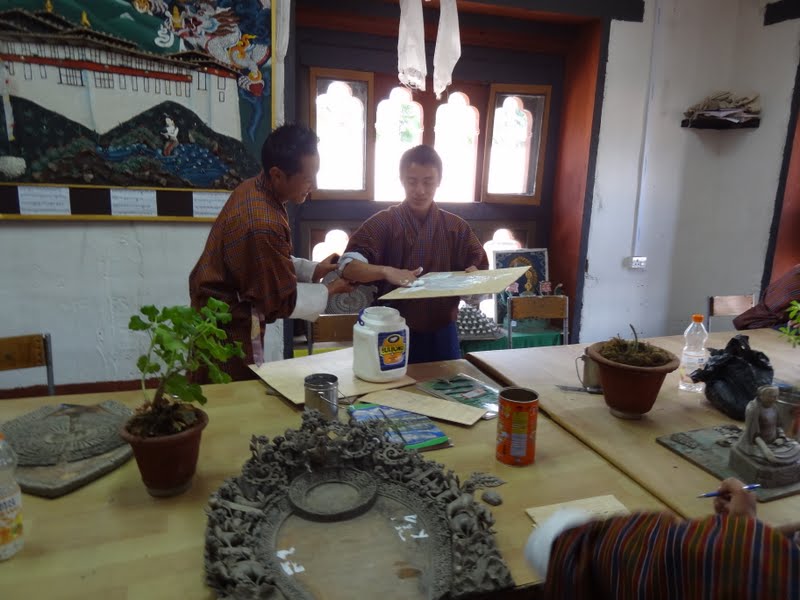
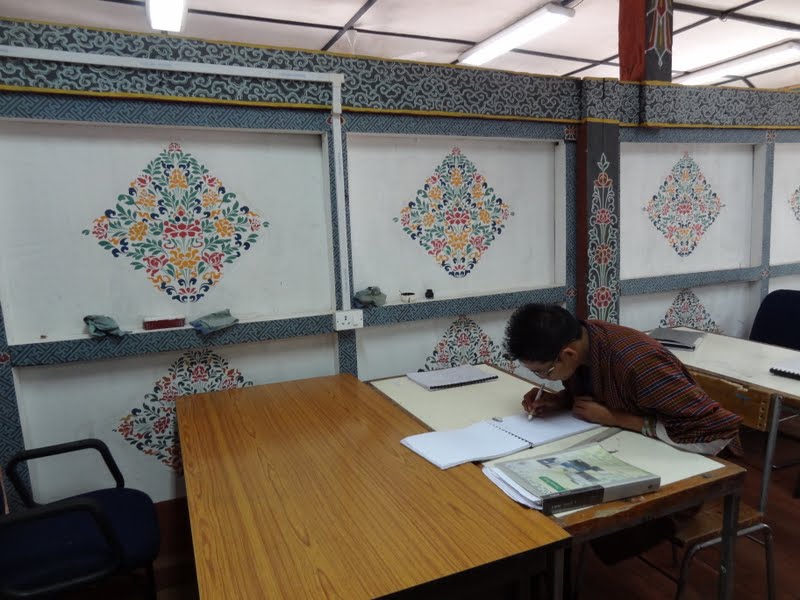
The government operates a school to teach the 13 traditional arts and crafts and keep the skills alive. (Much of the tourist daily fee of $250 goes towards this). The courses are 4 to 6 years, and each aspect is repeated and repeated until perfect.

Some of the students at work


 The gong to call morning break
 and the students take time out (no food is eaten then)

Something a bit different and modern. The 'in' thing for carrying lunch among workers and school children seems to be these plastic baskets. We saw them everywhere, and finally got to see them close up when this lass was making and selling them at the weekend produce market we visited. Kind of macrame knotting.

The first few are from a studio in Paro, where 6 girls from country weavers' households have been employed. They work from memory, on beautiful and intricate family patterns, sometimes adding in 20-30 colours. Their day includes helping and cleaning in the shop/studio and some weaving before lunch, and then weaving for 5 hours in the afternoon, seated on the floor.


The traditional men's gho - which is very long, but worn bunched over at the waist so that it is about knee length.


These next pictures are of women weaving outside their homes.


The government operates a school to teach the 13 traditional arts and crafts and keep the skills alive. (Much of the tourist daily fee of $250 goes towards this). The courses are 4 to 6 years, and each aspect is repeated and repeated until perfect.

Some of the students at work








Something a bit different and modern. The 'in' thing for carrying lunch among workers and school children seems to be these plastic baskets. We saw them everywhere, and finally got to see them close up when this lass was making and selling them at the weekend produce market we visited. Kind of macrame knotting.


